
Cultural Adaptation for Trauma-Sensitive Schools is a short course designed to equip educators and school staff with practical strategies for creating inclusive, trauma-informed environments that respect and respond to diverse cultural backgrounds.
Participants will explore how culture influences students’ experiences of trauma and healing, and learn how to adapt trauma-sensitive practices to meet the needs of all learners. This short course fosters equity, empathy, and resilience in school communities.
The course can be taken as this independent short-course or as part of the deep dive course Trauma Sensitive Schools. For the latter, please click on the link below.
https://istep-global.com/our-courses/
Who is the course designed for
The course has been designed for educators, support staff, and paraprofessionals who deliver services directly or indirectly to children, adolescents, and teachers in the public, private, and international sectors. Relevant professionals include teachers, school counselors, adjustment counselors, child-care staff, college counselors, education-related health professionals, educational psychologists, juvenile-detention and youth prison educators, and social workers.
Organizations include independent, private, public, and international preschools, middle schools, elementary schools, high-schools, colleges, residential settings, juvenile detention centers, and children’s homes.
Course duration & pace of learning
✓ 30 minutes to 1 hour
✓ Self-paced learning
✓ Recommended over 1-2 weeks.
Course availability
✓ 12 months
Course certification
✓ Following course completion, click on the link to download your Certificate of Course Completion with the stated number of Continuing Professional Development (CPD) hours.
Course credits
✓ Completion of this course course provides 1 point towards the purchase of future courses.
Course objectives

- To understand how cultural background influences student experience of trauma and their responses to school-based interventions.
- To learn to adapt trauma-sensitive strategies to align with the cultural values, beliefs, and communication styles of diverse student populations.
- To promote the development of skills to recognize and reduce cultural bias in school policies, classroom practices, and student interactions.
- To explore how to design classroom and school environments that are trauma-informed and culturally affirming, fostering a sense of safety, belonging, and resilience for all students.
Books, video, websites & academic references
Books, video, websites and academic references are provided to help educators access and explore rigorous practice and research findings.
Open AI
You are advised to utilize ChatGPT to ask questions throughout lessons. To ask your questions, open the ChatGPT search page (click on the link below).
NB: There is no research evidence to support ChatGPT strategies for individual client’s mental health.
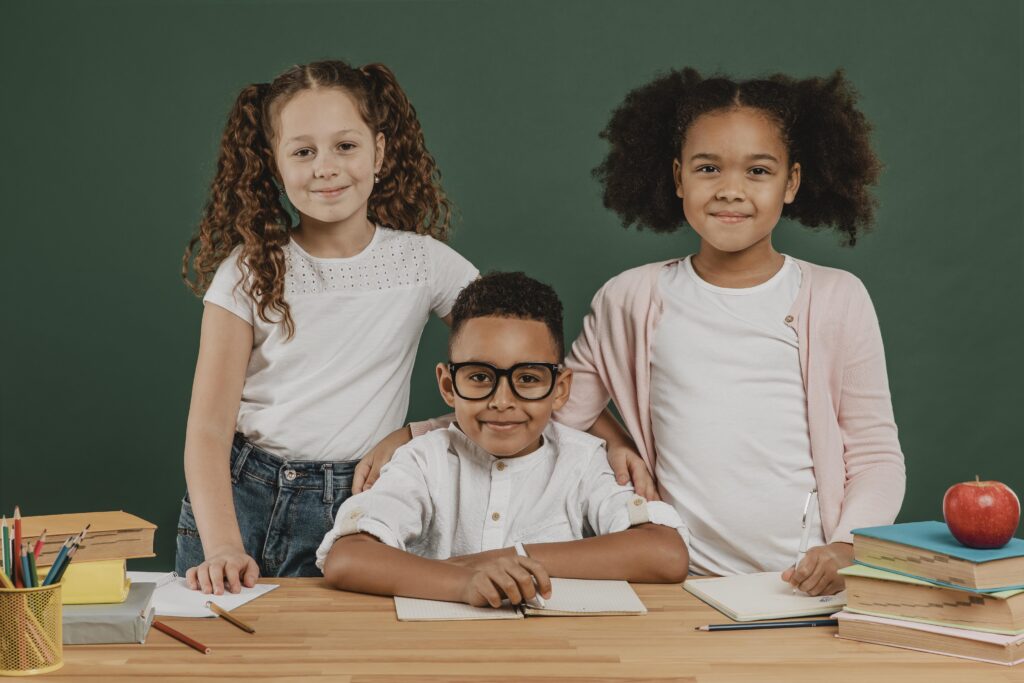
Photos by Freepik